
Choosing a dehumidifier for a Malaysian home? Compare your room and drainage needs before relying on the advertised litres per day: extraction ratings depend on test conditions and do not guarantee the same daily collection at home. Check whether the tank or a suitable drain fits your routine, especially if you plan to leave the unit running.
Quick select
This article contains affiliate links. We may earn a commission if you buy through them, at no extra cost to you.
Dehumidifiers in Malaysia is the focus of this guide, with practical comparisons of specifications, prices, strengths and trade-offs. Malaysia’s humid weather makes a dehumidifier useful, but a higher litre figure is not automatically a better buy. This September 2026 shortlist compares the compact Xiaomi Smart Dehumidifier Lite at a reference price around RM829, the Midea MDDF-20DEN7 20L Smart Dehumidifier at about RM985, and the AIRDRY Smart Pro 25L Dehumidifier / AIRDRY PRO-W 25L at RM1,299. These are the guide’s earlier Malaysia reference prices, not freshly verified checkout quotes: vouchers, bundles, delivery fees and seller stock can change the checkout total. My best compact/smart bedroom pick is Xiaomi, best overall is Midea for a typical apartment, and best premium larger-spaces pick is AIRDRY.
| Product | Approx. Malaysia price | Rated moisture removal and test condition | Coverage guidance | Tank and drainage | Noise / modes | Smart, filter and best fit |
|---|---|---|---|---|---|---|
| Xiaomi Smart Dehumidifier Lite | Earlier reference RM829; earlier cited range ~RM799–999 | 13L/day at 30°C/80%RH | 25m² claim from 25m² × 2.8m lab, 30±2°C/80%RH, 90-minute clothes-drying test | 3.02L; supplied 1m continuous-drain hose | 34dB(A) sleep test; clothes-drying mode | Mi Home/app target 40–70%RH; compact bedroom |
| Midea MDDF-20DEN7 20L Smart Dehumidifier | Earlier reference ~RM985; earlier cited range ~RM920–1,010 | 20L/day at 30°C/80%RH | Manufacturer guidance around 37–52m², not a Kuching-room guarantee | 3L; continuous drainage option | 46/43/41dB(A), high/medium/low; continuous, smart and laundry modes | SmartHome, automatic 45–55%RH, super ionizer; living rooms |
| AIRDRY Smart Pro 25L Dehumidifier / AIRDRY PRO-W 25L | Earlier reference RM1,299; seller reference RM1,599 | 25L/day at 30°C/80%RH | Seller says up to 60m²; treat as seller guidance | 5.3L plus continuous drainage | Seller lists 50–54dB; laundry mode | Smart Life, HEPA H13 mode and negative ion; humid/larger indoor rooms |
How to read dehumidifier numbers in a Malaysian home
A litres-per-day rating is a laboratory capacity, not a daily harvest promise in every bedroom. Xiaomi’s 13L/day figure is specifically at 30°C and 80% relative humidity. AIRDRY’s 25L/day uses the same 30°C/80%RH reference. Midea’s official Malaysia catalogue also rates 20L/day at 30°C/80%RH. Cooler or less humid air generally reduces extraction. Open doors and incoming humid air can keep the machine collecting water while making the room’s target RH harder to reach; water collected and humidity control are different measures. Coverage claims also need context: Xiaomi’s 25m² figure comes from a 25m² room with a 2.8m ceiling at 30±2°C/80%RH, in clothes-drying mode for 90 minutes with an average 20% RH reduction. Midea’s 37–52m² guidance and AIRDRY’s seller-stated up-to-60m² are useful starting points, not guarantees for an open-plan home in Sabah or a badly ventilated laundry area.
For a fair home test, close windows and doors for a defined period, place the unit with safe airflow clearance, record starting temperature and RH on the same hygrometer, and compare the RH after several hours. Do not put the machine tight against curtains or a wall. A sealed bedroom can reach its target more quickly than a living room with doors opening repeatedly. Laundry mode may run harder and make more water, but it does not magically dry a whole house. A continuous drain to a suitable floor drain avoids tank trips; a tank is safer when no drain is available but needs emptying. Keep the hose routed without kinks and never create a trip hazard.
1. Xiaomi Smart Dehumidifier Lite — best compact/smart bedroom
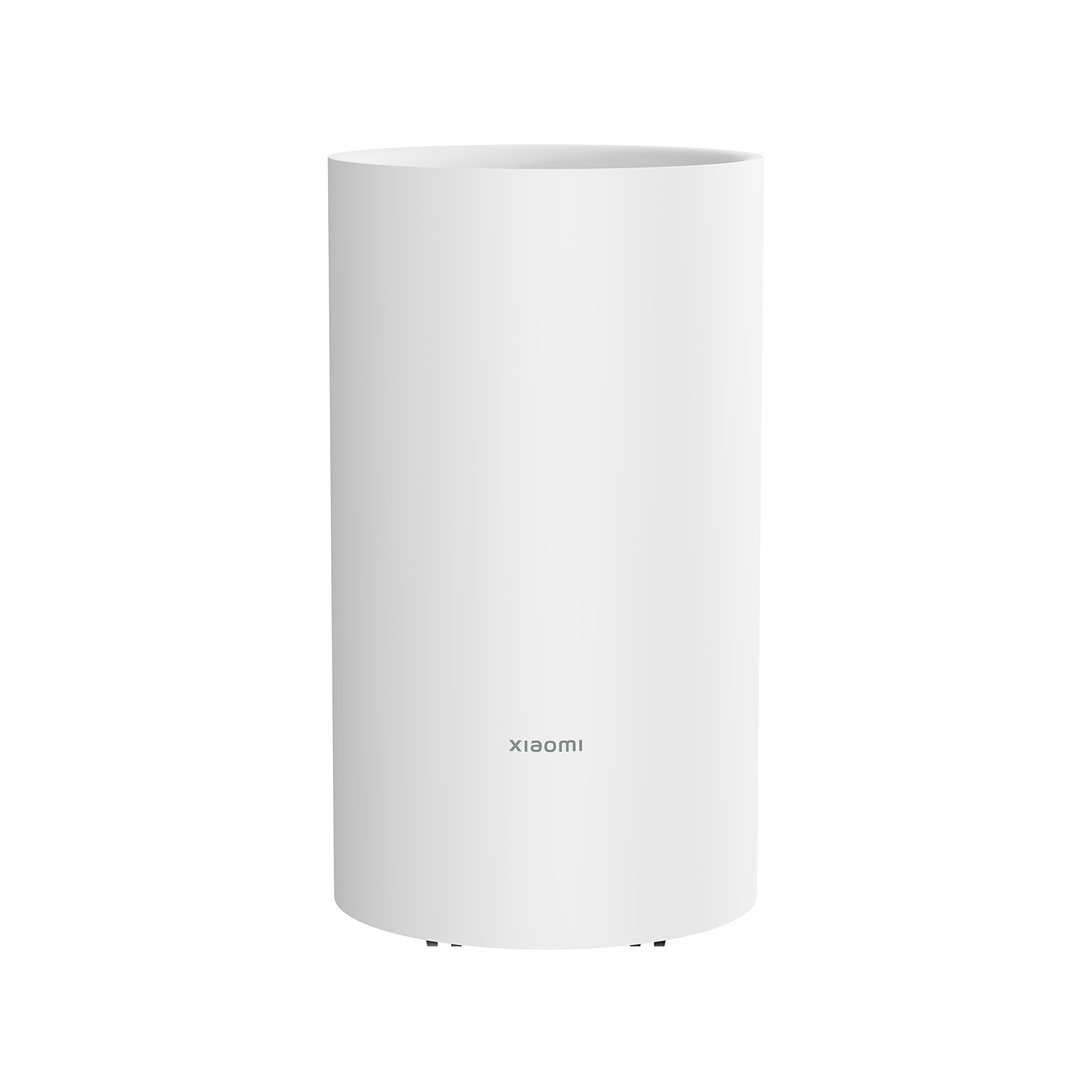
Xiaomi Smart Dehumidifier Lite is the easiest recommendation when the target is one enclosed bedroom rather than an entire apartment. The guide’s earlier RM829 reference and RM799–999 quoted range are budget markers, not a newly checked official offer; vouchers and sellers can change the ranking. The rated 13L/day capacity is respectable for a compact unit, but remember the precise 30°C/80%RH condition. Xiaomi’s 25m² statement is especially easy to overread; it is based on a 25m² by 2.8m laboratory room at 30±2°C/80%RH, clothes-drying mode for 90 minutes, and an average 20% RH reduction. That is evidence for a test setup, not a promise that a connected open-plan 25m² Malaysian space will behave identically.
The practical details suit a bedroom. The 3.02L tank is manageable, and the included 1m continuous-drain hose can reduce emptying when a proper drain is nearby. In a test around 27°C/60%RH, the tank was described as lasting about 10 hours near 3L, which helps set expectations rather than guaranteeing your runtime. Xiaomi documents 34dB(A) in a sleep-mode test, while its Malaysia specification sheet [1] lists noise at ≤38dB(A), rated power at 190W and maximum input at 250W. These are different specification labels, not a promise of constant noise or electricity use; compressor cycling, room acoustics and placement affect what you hear. The app can target 40–70%RH and defaults smart operation around 50%RH; it does not guarantee one-percent precision at every moment. Tank-full auto stop, smart defrost and compressor restart delay are useful protection features. Xiaomi’s product notes [2] also describe a 30-minute compressor pause after eight hours of continuous operation, with the fan still running; the ten-hour tank example is not a guarantee of uninterrupted compressor operation.
Pros
- Compact bedroom-oriented design with a clearly documented 34dB(A) sleep test.
- Continuous-drain hose is included, rather than requiring an immediate accessory purchase.
- App control and a 40–70%RH target range make remote checking convenient.
- Protection features and a 3.02L tank fit routine home use.
Cons and limitations
- 13L/day is smaller than the Midea and AIRDRY capacities under their stated test conditions.
- 25m² coverage is tied to Xiaomi’s specific warm, humid laboratory test.
- A 3.02L tank still requires attention in very wet laundry sessions.
- Xiaomi’s Malaysia warranty page lists one year for Smart Dehumidifier main parts and six months for accessories, excluding consumables and cosmetic accessories, for mi.com/my purchases; confirm the Lite unit and any other seller’s warranty route in writing.
Who should buy it: Choose Xiaomi if you want an app-controlled bedroom unit, have a fairly enclosed room, value sleep-mode quietness and can use the supplied drain or empty the tank. Who should avoid it: Avoid it for a large open living space, a very wet laundry room, or if you do not want to clean the tank, inspect the hose and use an app. At the earlier RM829 and RM985 reference prices, Xiaomi saves about RM156 versus Midea. Its compact design and documented sleep test are the reasons to choose it; paying the extra for Midea buys a higher rated moisture-removal capacity.
Verdict: Xiaomi Smart Dehumidifier Lite is the best compact/smart bedroom pick. It can improve humidity control, but it is not a medical device and should not be sold as removing mould or curing allergies.
2. Midea MDDF-20DEN7 20L Smart Dehumidifier — best overall
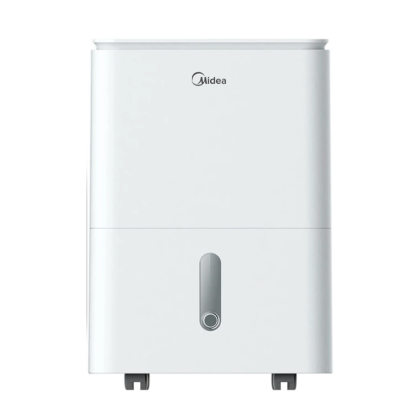
Midea MDDF-20DEN7 20L Smart Dehumidifier is the best overall choice for a typical apartment where one compact bedroom unit may feel underpowered but AIRDRY’s premium extras are unnecessary. The earlier RM985 reference and RM920–1,010 quoted range are not freshly checked checkout prices; the RM1,429 Hock Loong reference previously cited is not a like-for-like sale quote. Check the exact seller, invoice and delivery fee. Midea’s Malaysia catalogue specifies 20L/day at 30°C/80%RH and room guidance around 37–52m². Those figures are manufacturer guidance under particular conditions, not a guarantee that a 52m² open-plan Kuching home will reach a chosen RH quickly.
The feature set is broad for the middle price. SmartHome app control, automatic humidity around 45–55%RH, continuous operation and clothes-drying mode cover routine humidity and laundry. “Strong dehumidification” describes performance, rather than a separately confirmed mode. The official Malaysia catalogue [3] confirms wheels, continuous drainage, a washable filter and a 3L tank. It specifies 360W at 30°C/80%RH and 46/43/41dB(A) on high/medium/low, resolving the earlier incomplete seller-based figures. At a steady 360W, eight hours would use 2.88kWh; this is an arithmetic example, not a daily-use prediction, because the compressor cycles with conditions. Multiply measured kWh by your applicable electricity rate for a useful cost estimate. A 41dB(A) low-speed specification and Xiaomi’s 34dB(A) sleep test are not a controlled head-to-head comparison; test methods, mode and placement matter.
Pros
- 20L/day class gives more headroom than the compact Xiaomi for common apartment humidity.
- App, automatic 45–55%RH operation, continuous and laundry modes cover distinct jobs.
- Wheels and continuous drainage options make a heavier living-room unit easier to position.
- The Midea Malaysia product page [4] states one-year full warranty and five-year compressor warranty; keep the invoice and check the applicable registration and claim terms.
Cons and limitations
- Coverage and extraction ratings depend on the manufacturer’s test conditions.
- The confirmed 3L tank is not large; frequent laundry can still make a drain useful.
- The official catalogue states 360W at its specified test condition; actual energy use depends on runtime and compressor cycling.
- Published noise is 46/43/41dB(A), high/medium/low; a bedroom trial is still more useful than assuming “quiet” means inaudible.
Who should buy it: Pick Midea if you want a sensible middle ground for an apartment living room, need laundry mode and app control, and can provide a drain or empty a roughly 3L tank. Who should avoid it: Avoid it if Xiaomi’s 13L compact capacity already handles your sealed room, if night-time quiet is your top criterion without trying its compressor sound, or if you want a much larger tank. At the earlier reference prices, Midea costs about RM156 more than Xiaomi for 20L-class capacity and saves about RM314 versus AIRDRY while giving up its larger tank, 25L/day rating and HEPA H13 mode. Recalculate both gaps from actual checkout totals.
Verdict: Midea MDDF-20DEN7 20L Smart Dehumidifier is the best overall balance for Malaysian apartment humidity. Verify model nameplate, drain arrangement, return policy and warranty registration before checkout.
3. AIRDRY Smart Pro 25L Dehumidifier / AIRDRY PRO-W 25L — best premium larger spaces
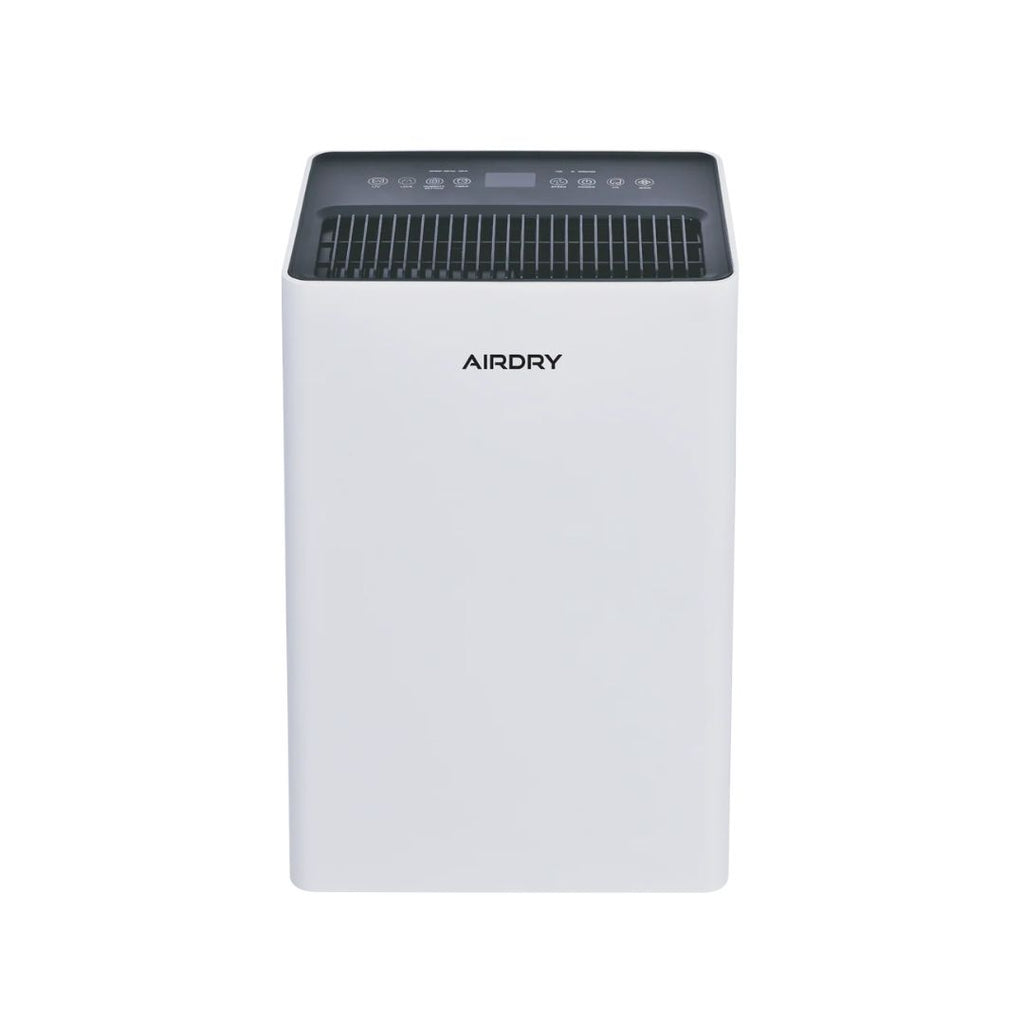
AIRDRY Smart Pro 25L Dehumidifier / AIRDRY PRO-W 25L is the premium pick for a humid indoor room when larger collection capacity or an integrated air-purifier mode matters. The guide previously used RM1,299 against a RM1,599 seller reference. Treat this as an earlier comparison point and recheck DryBox Malaysia’s listing [5] and checkout total before calling AIRDRY a fixed RM314 upgrade over Midea. The rated 25L/day is at 30°C/80%RH. The seller says coverage up to 60m²; keep that as seller guidance and do not derive a guaranteed floor area from litres/day. A room with open doors, cooking moisture or frequent clothes drying can behave very differently.
Its 5.3L tank stores more water than either 3L-class rival, while continuous drainage remains available. A larger tank does not automatically mean longer between emptying across different machines: the extraction rate matters too. The humidity setting spans 30–90%RH, and Smart Life app control plus laundry mode give more flexibility for a larger family room or drying area. The seller lists 50–54dB without an equivalent published test protocol, weighting or mode breakdown. Do not directly rank that range against Xiaomi’s 34dB(A) sleep test or Midea’s fan-speed figures; a sleep mode alone does not establish bedroom quietness. AIRDRY also lists an independent HEPA H13 air-purifier mode and negative-ion feature. These may be useful for particle filtration when the correct filter is installed, but dehumidification itself is not medical treatment, does not promise mould removal and does not replace ventilation or cleaning.
Pros
- 25L/day class and seller-stated up-to-60m² guidance target more humid or larger indoor spaces.
- 5.3L tank provides more collection capacity, with continuous drainage for longer runs.
- Smart Life, 30–90%RH setting and laundry mode provide practical control.
- HEPA H13 purifier mode adds a separate filtration function when filter upkeep is accepted.
Cons and limitations
- At the earlier RM1,299 comparison point, AIRDRY was the highest-priced option; recheck today’s price gap before paying for features a small bedroom may not need.
- Seller-listed 50–54dB lacks directly comparable test details; noise-sensitive buyers should seek a demonstration or suitable return terms.
- The HEPA filter is non-washable and needs periodic replacement; confirm genuine filter price and availability.
- At 17kg net listed weight, moving it upstairs or between rooms needs planning.
Who should buy it: Choose AIRDRY if you have a larger or persistently humid indoor room, want larger tank capacity, can install continuous drainage, and will actually use the purifier mode and app. Who should avoid it: Avoid it for a small budget bedroom, a quiet-sleep priority, or a buyer who will not budget for filter replacement and tank cleaning. Using the earlier RM1,299 and RM985 references, AIRDRY costs about RM314 more than Midea for the larger tank, 25L/day class and HEPA H13 mode. This historical gap must be recalculated, and extra capacity does not guarantee faster results in a leaky or open room.
Verdict: AIRDRY Smart Pro 25L Dehumidifier / AIRDRY PRO-W 25L is the best premium larger-spaces pick, provided its actual noise, verified running-power details and filter cost fit your room.
Malaysia buying and setup checklist
Before paying, compare the voucher-adjusted price, exact model name, included hose, tank design, app compatibility and seller return window. Ask for a Malaysian invoice and written warranty route. Midea’s one-year full and five-year compressor coverage remains subject to its terms. Xiaomi’s Malaysia warranty page [6] lists one year for Smart Dehumidifier main parts and six months for accessories, excluding consumables and cosmetic accessories, with walk-in service for mi.com/my purchases; confirm that coverage for the exact Lite unit and seller. AIRDRY’s brand page describes a two-year carry-in warranty [7]; obtain the Malaysian service location and transport-cost terms in writing. East Malaysia buyers in Sabah and Sarawak should ask whether delivery is available to the postcode, how many days are realistic, whether bulky returns cost extra, and who pays collection for a leaking or damaged unit. A low headline price is not low if a faulty 17kg appliance must be shipped back at your expense.
Keep safe clearance around the air inlet and outlet, keep the appliance level, and route a drain hose away from electrical sockets and walkways. Do not block airflow with curtains. Clean the tank and accessible filter as directed; a dirty filter reduces airflow and adds operating cost. The AIRDRY manual linked by DryBox Malaysia [8] specifies 345W input, conflicting with the shop’s “±15W/Day” entry; W/day is not a usable daily-energy figure, so confirm the supplied unit’s nameplate before estimating costs. Its manual requires 50cm clearance, a drain tube below the outlet and reinstallation of the tank. It prohibits wet areas such as bathrooms or laundry rooms: laundry mode should not be read as permission for wet-area placement. The H13 filter must not be washed; the stated replacement interval is 6–12 months, depending on use and condition. For app models, use a strong home Wi-Fi setup but ensure basic buttons still work if the network is unavailable. Do not promise mould removal or medical outcomes: control humidity, fix leaks, ventilate where appropriate and clean visible contamination safely.
Final recommendation
Buy Xiaomi Smart Dehumidifier Lite for one sealed bedroom where compact size, app control and a documented sleep-mode test matter. Buy Midea MDDF-20DEN7 20L Smart Dehumidifier as the best overall apartment compromise, using its documented 360W test-condition specification and realistic noise expectations. Buy AIRDRY Smart Pro 25L Dehumidifier / AIRDRY PRO-W 25L when a larger tank, stronger capacity class and purifier mode justify the premium. In every case, compare RH under the same sealed-room conditions, decide between tank emptying and continuous drain, and budget for electricity, cleaning, possible filters, delivery and warranty handling.
FAQ
Will a 25L unit always collect more water than a 13L unit? No. The ratings use specific temperature and humidity conditions; room leakage, RH and compressor cycling decide actual collection. Should I run one with the windows open? Usually not for a controlled dehumidifying test, because humid outside air keeps entering. Ventilate separately when needed and follow safe appliance placement. Does a dehumidifier remove mould? It can help lower humidity, but it is not a mould-removal service or medical treatment. Fix moisture sources and clean affected surfaces appropriately.
Pingback: September 2026: Dehumidifier Terbaik untuk Rumah di Malaysia
Pingback: 2026年9月:马来西亚 Dehumidifier 选购指南
Pingback: Best Air Purifiers in Malaysia | September 2026